Germany · English
Considering Northern Cyprus from Germany? Culture, Coast and Everyday Life
A practical guide for Turkish- and Arabic-speaking residents of Germany considering northern Cyprus: language, coastal living, budgets and everyday routines.
A place to call home
Perhaps you have built a career in Germany but would like a second home where everyday life feels more familiar. A place for longer family meals, time by the sea and conversations that do not always need to be scheduled.
For Turkish- and Arabic-speaking residents exploring that possibility, northern Cyprus is worth examining closely. The attraction can be a mix of language, food, cultural traditions and Mediterranean surroundings. The right decision depends on your own priorities, finances and residence rights—not simply a promise that life elsewhere will be cheaper or easier.
A familiar language, with a distinct local identity
For Turkish speakers, using Turkish in everyday settings can make getting to know an area more approachable. Speaking with neighbours, asking an owner about a home or finding your way around local services may feel less demanding when you can have those conversations directly.
Turkish Cypriot life also has its own identity. It should not be treated as a replica of life in Türkiye, nor assumed to be the same experience for every newcomer.
For Arabic-speaking buyers, the useful questions are practical: which services offer Arabic support, what languages are used at prospective schools, and where can you find the community activities and food that matter to you? Do not assume Arabic is widely spoken simply because the local culture has Muslim traditions.
Tradition can be part of a modern daily routine
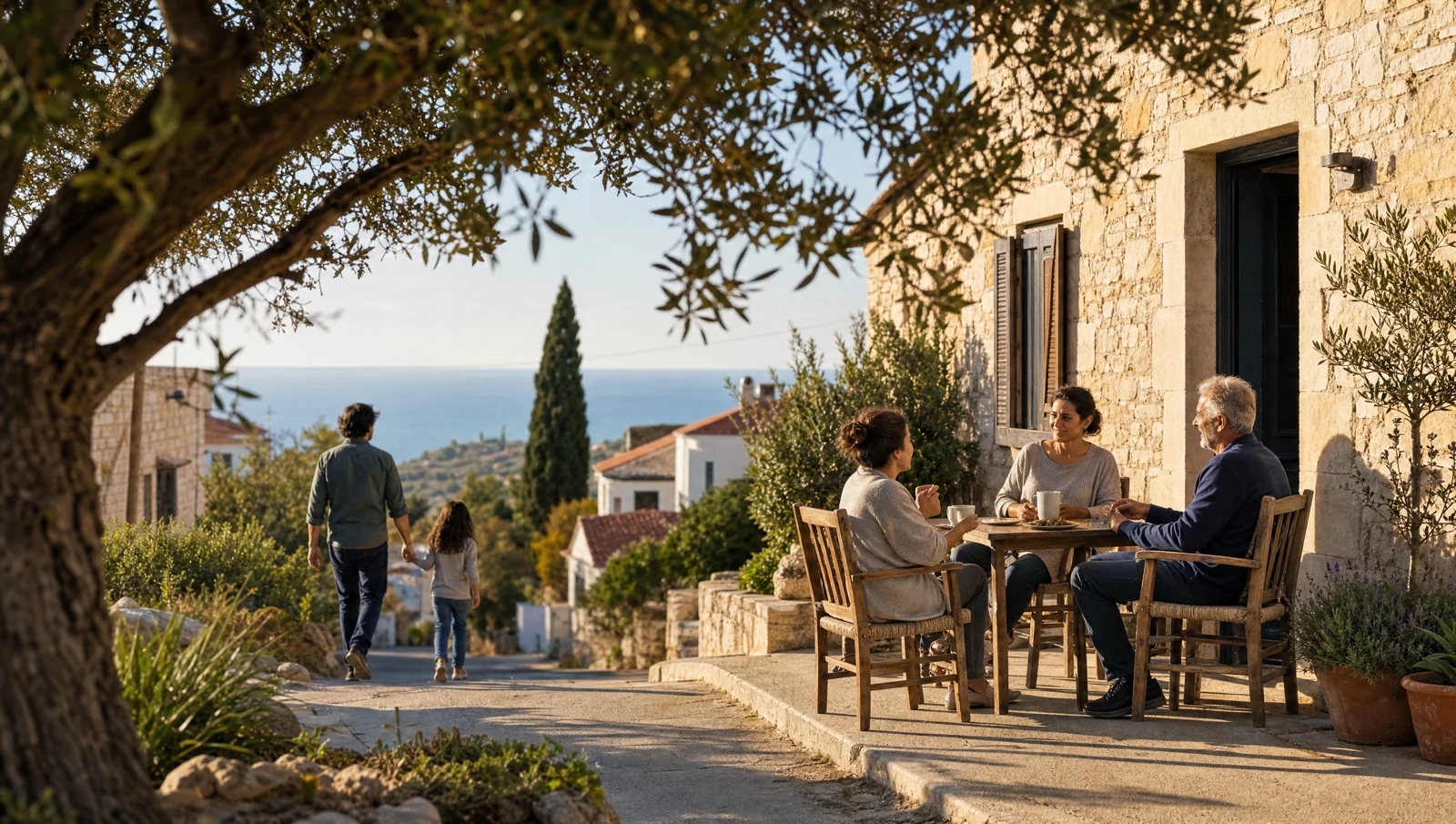
The appeal may be as ordinary as a shared table, a familiar dish or time for coffee. Buyers who value Muslim cultural traditions can explore how local life fits their own preferences, while also experiencing a range of social settings.
Religious identity does not tell you how everyone lives. Visit the neighbourhoods you are considering, speak with residents and judge the atmosphere for yourself. A lively town and a quiet village can offer very different versions of the same island.
Choose the town, or make room for the coast
If you enjoy going out, investigate the restaurants, cafés, hotels and evening venues around your chosen town. See what is open throughout the year, how easy it is to get home and whether the surrounding noise suits your household.
If you want a quieter base, focus on the daily details of coastal living: access to the water, outdoor space, shade, walking routes and nearby shops. Swimming, a morning walk and an evening on the terrace can become the experiences you choose a property around. For activities such as kitesurfing, check actual local operators, suitable conditions and seasonal availability rather than assuming access from every coastal home.
Official local tourism information describes walking and cycling opportunities around rural communities, olive groves and the mountain foothills. These are useful starting points for planning an exploratory visit. Explore the local ecotourism guide.
Olive groves and a more seasonal way of living
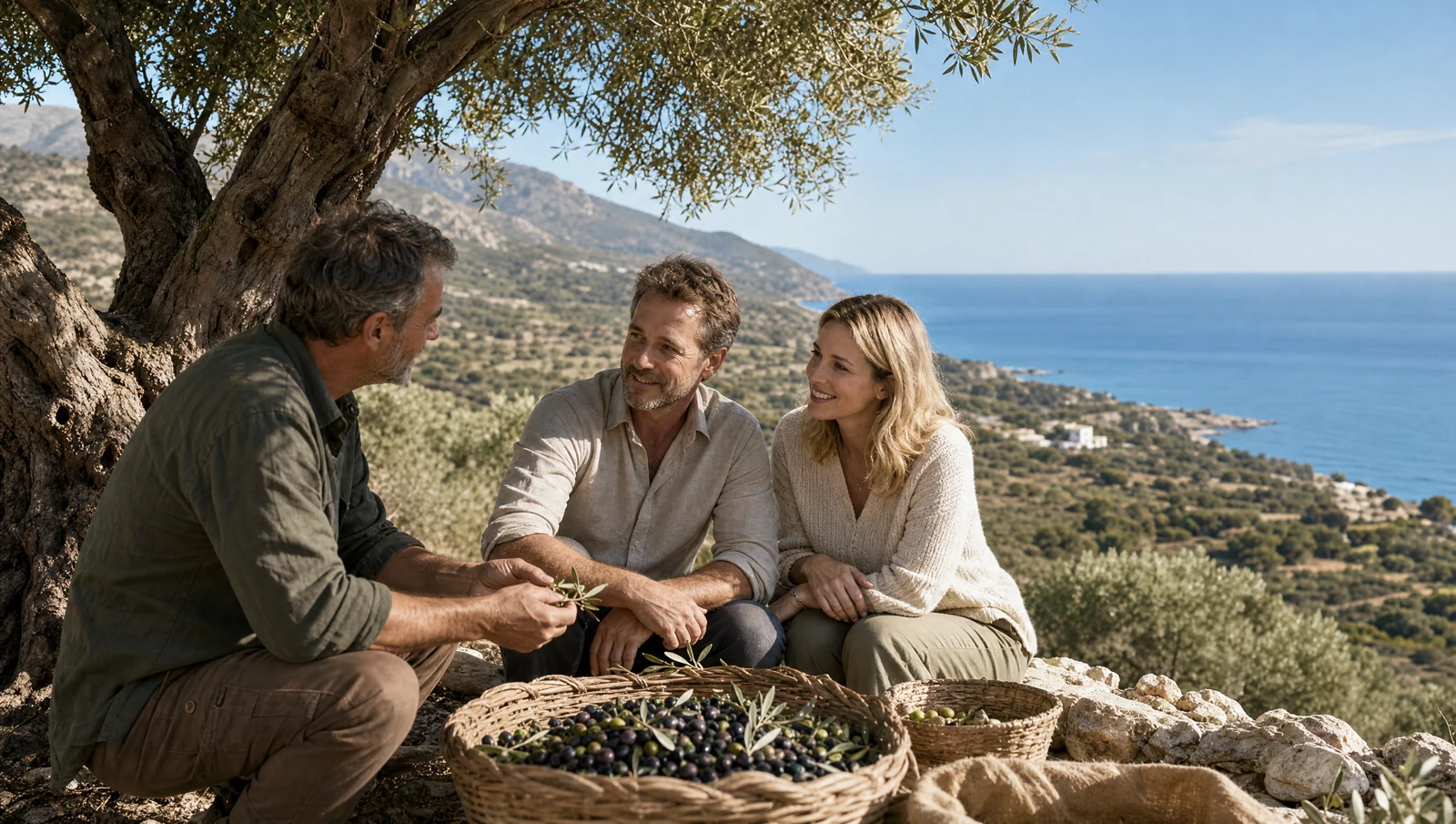
Olives have a longstanding place in Cypriot culture. For someone interested in food and the countryside, learning about the harvest and local olive oil can offer another way to get to know the area. Read about the island's olive traditions.
If picking olives or visiting a press is part of the experience you want, arrange it with a farm or landowner and check the season. A nearby grove does not give visitors permission to harvest its fruit.
Could your budget support the life you want?
If housing costs, taxes and monthly bills in Germany leave less room for the things you enjoy, compare a realistic household budget for the specific place you are considering.
Include housing, purchase costs, utilities, cooling and heating, healthcare, insurance, school fees where relevant, transport, maintenance and travel back to Germany. Check the currencies in which major expenses are quoted and allow for exchange-rate changes. A lower asking price alone does not establish that your total cost of living will be lower.
Request current figures from owners and service providers. Your money may support a different lifestyle, but the comparison should come from your numbers rather than a general claim about affordability.
A second home does not automatically change your taxes
Buying a home abroad does not, by itself, end German tax obligations. German residence or habitual abode can create unlimited tax liability; individual circumstances and applicable rules determine the outcome.
Plan the journeys that matter to you
Your passport and immigration status matter when planning travel and residence. If you hold a German residence permit, check how extended absences could affect it with the relevant German authority before committing to a move. Map the actual journey, including connections and entry requirements; geographical proximity does not guarantee a straightforward route.
Begin with a visit and a conversation
You do not have to decide on a permanent move to begin exploring. Spend time in the area outside the holiday routine. Visit the shops, test the journeys and ask yourself whether the place feels comfortable on an ordinary weekday.
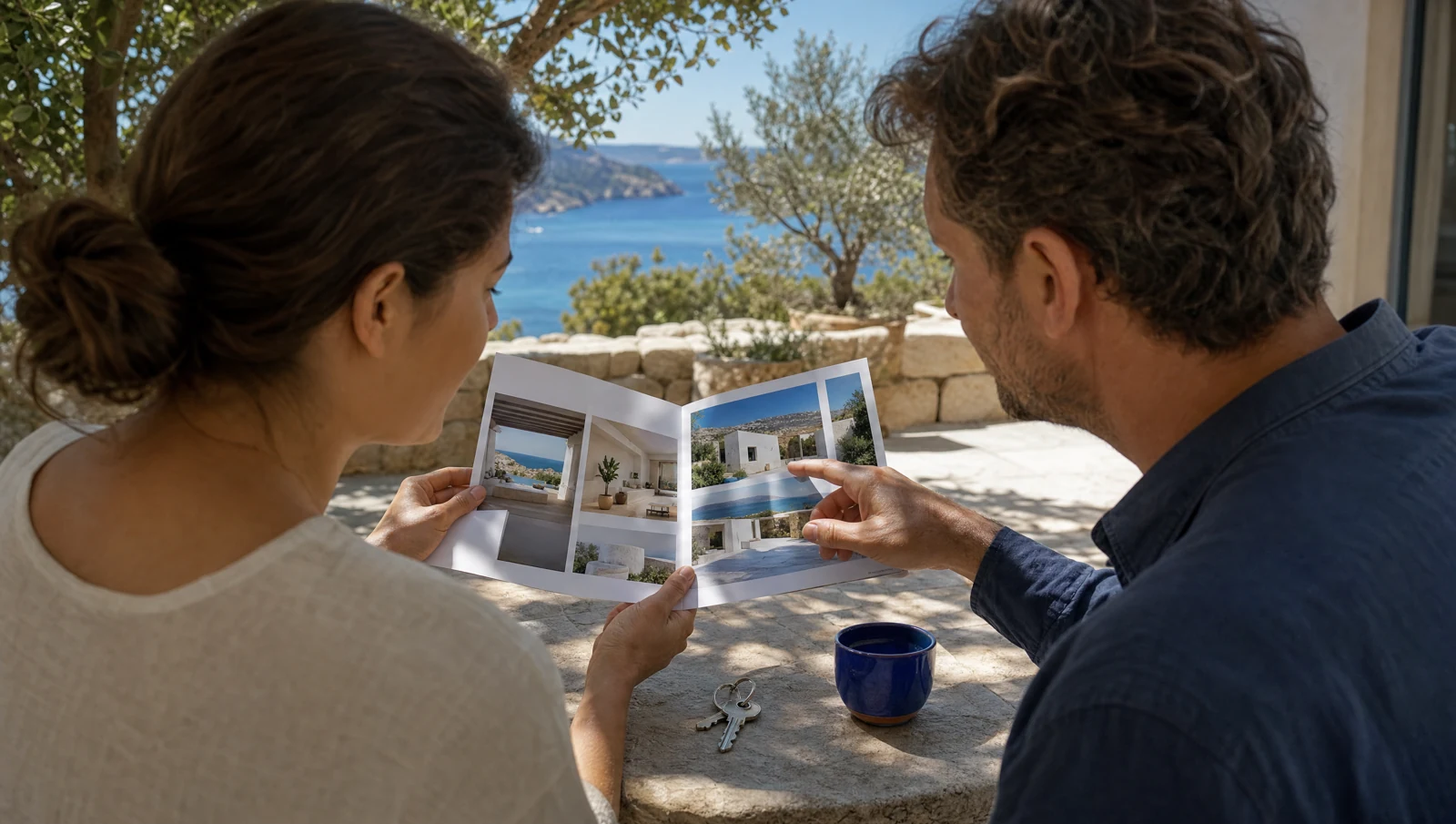
Explore properties on Direct from Owner, request a brochure in your preferred language and ask the owner about life beyond the floor plan. Use the answers to compare the home with your everyday needs and budget.
Find a home worth asking about.
Explore the photographs and details, then request a brochure in your preferred language.
Explore the collection ↗